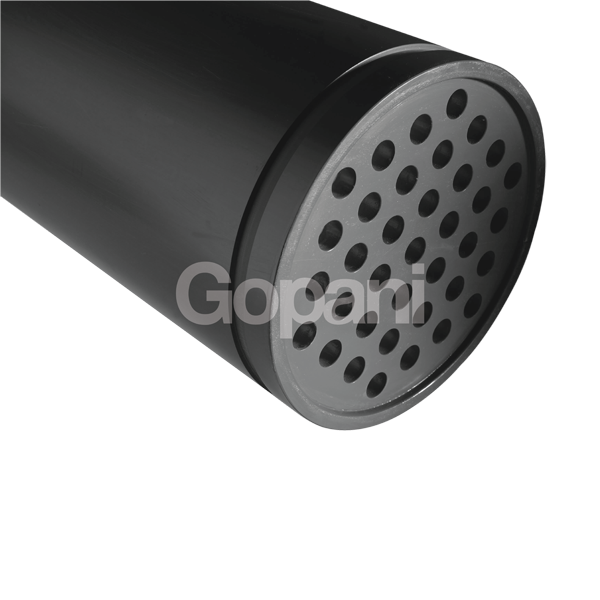
Porex Tubular Membrane Filter (TMFTM) modules contain unique, patented, structural membrane tubes. These structural membrane tubes are made from a PE or PVDF sintered porous substrate that creates an intricate network of open-celled, omnidirectional pores. These substrate pores are then filled with membrane which gives our tubes a unique combination of filtering capability and structural strength.
Features and Benefits
POREX Tubular Membrane Filter modules provide consistent, reliable solid/liquid separations and long service life.
PE substrate with PVDF membrane offers high-performance tubular membrane with superior operating characteristics.
Multiple configurations available to suit your application’s flux and solids level requirements (up to 5% by weight).
Patented PVDF substrate with PVDF membrane offers high temperature and enhanced chemical compatibility (pH range of 0-14 standard units).
Uniform, thermally-bonded omni-directional substrate pore structure provides an optimized support structure for tubular membranes.
Multiple membrane pore sizes available on two different substrate options.
Applications
FAQs
What are filter bags for?
Filter bags are an integral part of bag filter systems, used to capture and remove solid particles from liquids or gases. They help reduce downstream contamination and improve process efficiency across industries like chemicals, food & beverage, pharmaceuticals, and water treatment.
What materials are Gopani filter bags made from?
Gopani filter bags are available in materials such as polyester, polypropylene and nylon, plus specially treated media for high temperature or chemical resistance depending on your application.
What Collar Options are available for filter bags?
Common collar options include steel ring collars, plastic collars and specialized welded collars to suit different housings and sealing methods.
What filtration ranges do Gopani filter bags cover?
Filtration ranges typically span from 1 micron to 500 microns depending on media and construction.
What flow rates can Gopani filter bags handle?
Flow rates depend on bag size, media and system design; we can help select the correct bag based on your LPM/GPM requirements.
Are Gopani filter bags reusable?
Some filter bags can be cleaned and reused depending on the solids and application; however, single-use bags are common for contamination control.
How do I know when to replace a filter bag?
Replace when you observe a significant pressure drop, physical damage to the bag, or when the recommended service life has been reached for your application.